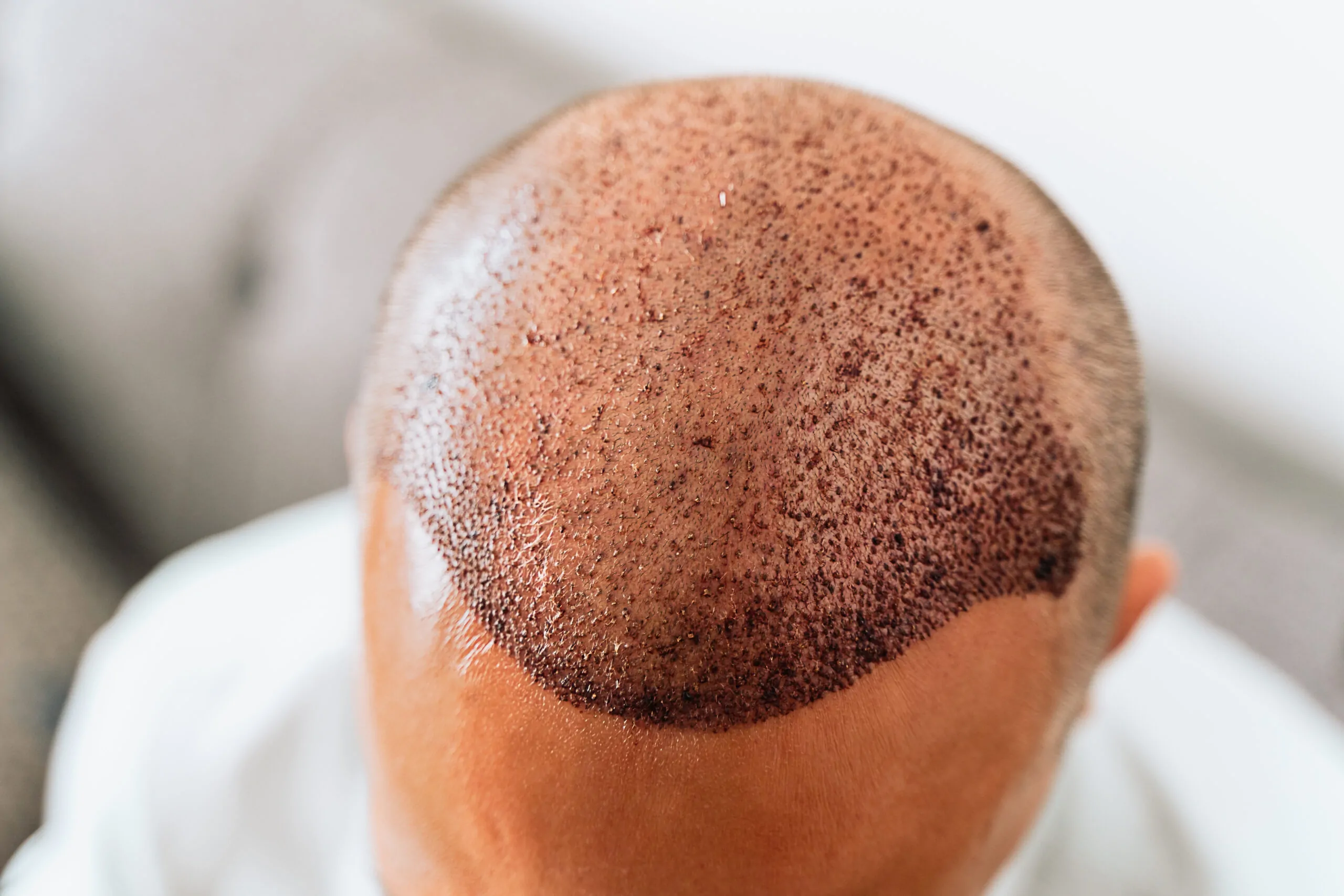
For many people struggling with hair loss, hair transplantation can offer a long-lasting, natural-looking solution. In recent years, the DHI pen technique (Direct Hair Implantation) has become popular thanks to its precision and minimally invasive approach.
So, what exactly is DHI, how is it performed, and who is it best suited for? Let’s take a closer look.
What Is the DHI Pen Technique?
DHI stands for Direct Hair Implantation. With this method, hair grafts are implanted into the scalp using specially designed implantation pens (often called Choi pens).
In traditional FUE:
-
Channels are opened first
-
Then the grafts are placed into those channels
With DHI, the process is slightly different:
1️⃣ Grafts are harvested from the donor area
2️⃣ Each graft is loaded into the DHI pen
3️⃣ Channel opening and implantation happen simultaneously
This allows the doctor to control the direction, depth, and angle of each graft with greater precision.
How Is the DHI Technique Performed?
A DHI hair transplant usually follows these steps:
✔ 1. Consultation & planning
Hairline, density, and donor capacity are evaluated. A personalized plan is created.
✔ 2. Local anesthesia
Local anesthesia is applied to minimize discomfort.
✔ 3. Graft extraction
Grafts are harvested individually, usually from the back of the head.
✔ 4. Implantation with the DHI pen
The grafts are loaded into the pen and implanted at the desired angle, direction, and depth.
✔ 5. Aftercare guidance
Post-procedure care and recovery instructions are explained in detail.
Advantages of the DHI Pen Technique
DHI offers several notable benefits:
⭐ More natural hairlines
Because angle and direction are carefully controlled, results can look very natural.
⭐ Less tissue trauma
Since channel opening and implantation happen together, there may be less mechanical trauma to the scalp.
⭐ Faster recovery for some patients
Smaller incisions can support a more comfortable healing process.
⭐ Better protection of the donor area
Grafts are taken more strategically, helping the donor area look more uniform.
⭐ Ideal for filling thin or sparse areas
DHI allows precise placement between existing hairs without damaging them.
Important: These advantages depend heavily on the experience of the surgeon and medical team.
Are There Any Limitations?
Like every technique, DHI has some limits:
-
May not be sufficient alone for very large bald areas
-
The procedure can take longer
-
Costs may be higher due to tools and expertise required
-
Poor planning may result in unsatisfactory density
That’s why technique selection should always be individualized.
Who Is a Good Candidate for DHI?
DHI is especially useful in cases such as:
✔ Hairline design
✔ Density enhancement in thinning areas
✔ Selected female hair loss cases
✔ Young patients with partial thinning
However, it may not be suitable for people with:
-
Active scalp infections
-
Uncontrolled chronic diseases
-
Insufficient donor supply
A qualified specialist should always make the final decision.
Bottom Line: DHI Can Be a Powerful Option — for the Right Patient
The DHI pen technique offers precise control, natural-looking results, and a comfortable recovery experience. But it is not automatically the best choice for everyone.
👉 The safest way to decide is through a professional consultation based on your hair type, degree of hair loss, and expectations.
This article is for informational purposes only and does not replace medical advice.