


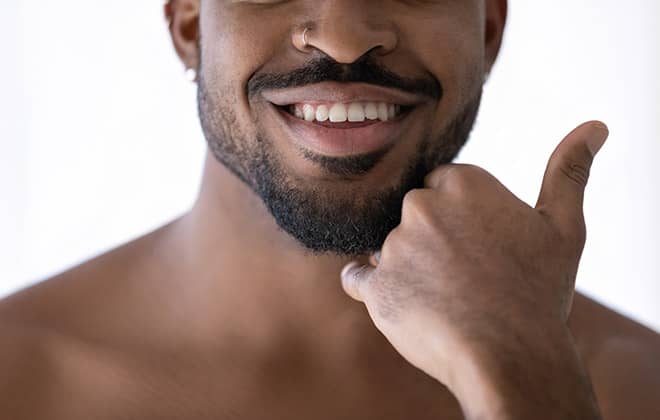
Facial hair has long been associated with masculinity, maturity, and style. However, not all men are able to grow a full, even beard. Whether it’s due to genetics, scarring, or hormonal imbalances, patchy or thin facial hair can impact confidence. Fortunately, a beard transplant offers a permanent and natural-looking solution.
What Is a Beard Transplant?
A beard transplant is a cosmetic procedure that involves taking healthy hair follicles — usually from the back of the scalp — and implanting them into areas of the face where beard growth is lacking or uneven.
It’s a minimally invasive surgery performed under local anesthesia, and the results are permanent. Once transplanted, the hair grows just like natural facial hair and can be shaved, trimmed, or styled as desired.
Why Do Men Get Beard Transplants?
Beard transplants are chosen by individuals who:
- Have naturally patchy or sparse beard growth
- Suffer from facial scarring or trauma
- Want to enhance or redefine their jawline and facial contours
- Have lost facial hair due to medical conditions (e.g., alopecia)
- Desire a fuller, denser, or more defined beard style
The procedure is also popular among trans men seeking more masculine facial features as part of gender-affirming care.
How Does a Beard Transplant Work?
The most common technique used is FUE (Follicular Unit Extraction).
1. Consultation and Beard Design
- A facial hair assessment and design session defines the desired beard shape, density, and coverage.
- Symmetry, jawline, and facial proportions are carefully considered.
2. Donor Hair Extraction
- Hair follicles are harvested individually from the donor area, typically the back of the scalp.
- Local anesthesia is used to ensure a painless experience.
3. Graft Preparation
- Extracted follicles are preserved in a special solution to maintain their health before implantation.
4. Facial Hair Implantation
- Tiny incisions are made in the beard area, following natural growth angles.
- Follicles are inserted one by one with high precision for a realistic appearance.
Beard Transplant Zones
Hair can be transplanted to any facial area, including:
- Cheeks
- Jawline
- Chin
- Moustache area
- Sideburns
- Neck
- Scar coverage
Each region can be customized depending on your facial hair goals.
Benefits of Beard Transplant
- ✅ Permanent and natural-looking results
- ✅ Customizable beard design
- ✅ Improves symmetry and facial aesthetics
- ✅ No visible scarring in the donor area
- ✅ Works even on scarred or damaged skin
- ✅ Boosts confidence and self-image
Healing Process After Beard Transplant
Day 1–3:
Mild redness and swelling around the implanted area. Tiny scabs begin to form.
Week 1:
Scabs fall off naturally. Avoid touching or scratching the beard.
Week 2–3:
Some transplanted hairs may fall out — this is temporary shedding, a normal part of the process.
Month 3–4:
New facial hair starts to grow from the implanted follicles.
Month 6–12:
Hair thickens and fills in. Final results become fully visible by the 12th month.
Do Beard Transplants Look Natural?
Yes. When performed by experienced specialists, beard transplants result in completely natural-looking facial hair. Each graft is placed at the correct angle, depth, and direction, mimicking natural growth.
Proper design of the hairline, cheek lines, and density contributes to an authentic appearance.
Who Is a Good Candidate for a Beard Transplant?
Ideal candidates include:
- Men with thin or patchy beard growth
- Those who want to reshape or enhance their facial hair
- People with scarring or skin damage in the beard area
- Individuals in overall good health with adequate donor hair
A consultation is necessary to determine the quality of donor hair and realistic outcomes.
Is a Beard Transplant Painful?
No. The procedure is done under local anesthesia. Most patients report only mild discomfort, if any, during or after the transplant. Recovery is generally smooth with minimal downtime.
Can the Transplanted Beard Be Shaved or Styled?
Yes. Once fully healed, transplanted beard hair can be:
- Shaved or trimmed
- Styled into any desired look
- Shaped using grooming tools
- Treated like natural facial hair
Since the hair comes from your own scalp, it behaves just like regular beard hair after it begins to grow.
Risks and Side Effects of Beard Transplant
While considered safe, potential side effects include:
- Redness and swelling in the transplant area
- Temporary itching or numbness
- Shock loss (initial hair shedding)
- Minor asymmetry (can be corrected if needed)
- Ingrown hairs or slight folliculitis (rare)
These effects are generally mild and short-term when proper care is taken.
Aftercare Tips for Beard Transplant
- Do not wash your face for the first 48–72 hours.
- Avoid direct sunlight, sweating, or touching the area.
- Do not shave for at least 2–3 weeks.
- Use only prescribed skincare products or aftercare solutions.
- Sleep with your head elevated to reduce swelling.
- Avoid alcohol and smoking for optimal healing.
Proper aftercare helps ensure graft survival and supports healthy growth.
How Long Does a Beard Transplant Take?
Depending on the number of grafts, the procedure can take 4 to 8 hours. Some patients may require multiple sessions for fuller coverage or touch-ups.
Can Beard Transplants Be Done on Scar Tissue?
Yes. Hair can be successfully transplanted into scarred or damaged skin, although graft survival may vary depending on blood supply in the area. Advanced techniques and careful evaluation increase success in such cases.
A beard transplant is a reliable, safe, and transformative solution for men seeking fuller, well-shaped facial hair. Whether you’re filling in patchy areas, restoring hair lost to injury, or building a brand-new beard from scratch, this procedure delivers natural, permanent results tailored to your face.
With the right technique and proper aftercare, a beard transplant can redefine your appearance — and your confidence — for life.