


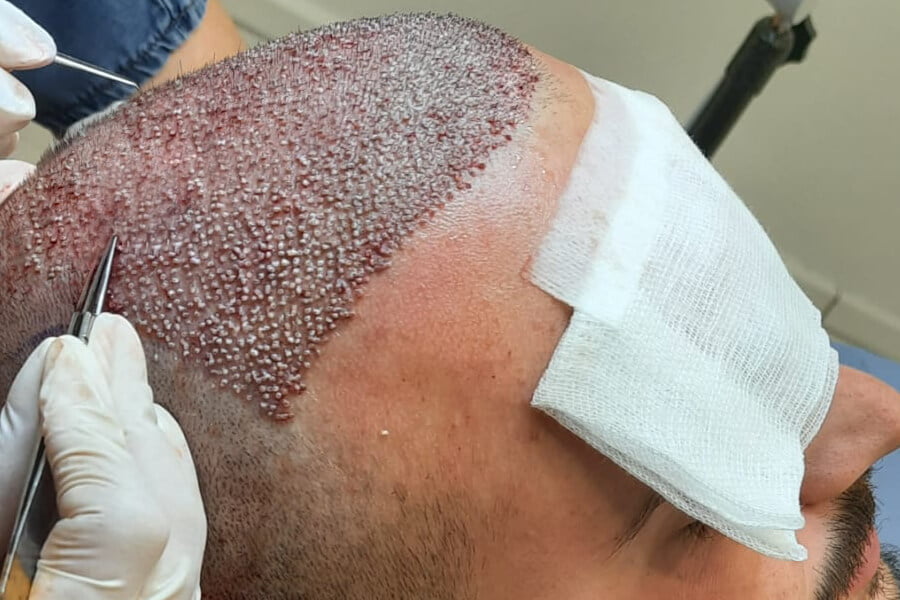
Hair loss can significantly impact confidence and self-image — but today, science offers permanent solutions. One of the most widely used and trusted techniques in modern hair restoration is the FUE hair transplant, short for Follicular Unit Extraction.
This method has become the gold standard for individuals seeking natural-looking, permanent results with minimal downtime.
What Is FUE Hair Transplant?
FUE (Follicular Unit Extraction) is a minimally invasive hair transplant technique where individual hair follicles are harvested from a donor area — usually the back or sides of the scalp — and implanted into areas with thinning or no hair.
Unlike older techniques such as FUT (Follicular Unit Transplantation), FUE does not require any scalp cutting or stitching. This means no linear scars, faster healing, and a more comfortable experience overall.
How FUE Hair Transplant Works
1. Consultation and Planning
A hair restoration specialist evaluates your hair loss pattern, scalp condition, and donor area. A personalized plan is created, including:
- Hairline design
- Number of grafts needed
- Coverage area
2. Donor Area Preparation
The donor area is shaved and cleansed. Local anesthesia is applied to ensure the procedure is painless.
3. Follicle Extraction
Using a micro motor or manual punch, hair follicles (also called grafts) are extracted one by one. These grafts are carefully selected to ensure they’re healthy and viable for transplantation.
4. Graft Preservation
Extracted follicles are stored in a special solution at a controlled temperature to keep them alive and healthy before implantation.
5. Recipient Site Creation
Tiny incisions are made in the recipient area, following the natural hair growth angle and direction. This step determines the aesthetic quality of the result.
6. Follicle Implantation
Each graft is placed into the incisions one by one. Precision in placement ensures density, direction, and natural appearance.
Benefits of FUE Hair Transplant
- ✅ No linear scars
- ✅ Minimally invasive
- ✅ Fast healing and recovery
- ✅ Natural-looking results
- ✅ Can be used for scalp, beard, eyebrows
- ✅ High graft survival rate
- ✅ Suitable for both men and women
FUE vs. FUT: What’s the Difference?
| Feature | FUE | FUT |
|---|---|---|
| Technique | Individual follicle extraction | Strip of scalp removed |
| Scarring | Tiny dot scars (nearly invisible) | Linear scar |
| Recovery Time | Faster | Longer |
| Pain/Discomfort | Minimal | Slightly more |
| Flexibility | More flexible with hairstyles | Less flexible |
FUE has become the preferred choice due to its lower risk, natural finish, and less invasive nature.
Who Is a Good Candidate for FUE Hair Transplant?
- Individuals with mild to moderate hair loss
- Those who want short hairstyles (due to lack of visible scarring)
- Patients looking for natural density and gradual restoration
- Men and women with stable hair loss patterns
- People wanting to restore beards, eyebrows, or mustaches
A healthy donor area and good general health are key criteria.
Healing and Recovery After FUE
- Day 1–3: Mild redness and swelling in the donor and recipient areas.
- Day 4–7: Scabbing begins to fall off naturally. It’s crucial not to pick or scratch.
- Week 2: Shedding of implanted hairs is normal — this is part of the cycle.
- Month 3–4: New hair growth becomes visible.
- Month 6: Noticeable improvement in density.
- Month 12: Full results are achieved.
Post-FUE Care Tips
- Do not wash your scalp for the first 3 days.
- Avoid heavy sweating, sun exposure, and wearing hats.
- Use only prescribed shampoos and aftercare products.
- Refrain from alcohol and smoking during healing.
- Sleep on your back with your head elevated.
- Do not engage in intense physical activity for the first 10 days.
Proper care ensures maximum graft survival and better final results.
Does FUE Hair Transplant Hurt?
No. The procedure is performed under local anesthesia, and most patients report minimal discomfort. After the operation, any soreness or tightness usually subsides within a few days and can be managed with simple medications.
How Long Does the FUE Procedure Take?
FUE sessions typically take 6 to 8 hours, depending on the number of grafts. Since each follicle is extracted and implanted individually, the process is meticulous and time-intensive, but the results are worth the effort.
Is FUE Hair Transplant Permanent?
Yes. The hair follicles used in FUE are resistant to the hormone that causes pattern baldness (DHT). Once implanted, these hairs continue to grow naturally for a lifetime, just like your original hair.
Risks and Side Effects of FUE
FUE is a safe and widely practiced procedure, but as with any medical treatment, minor side effects may occur:
- Temporary redness or swelling
- Itching in the donor or recipient area
- Shock loss (temporary shedding)
- Uneven growth (usually corrected as hair matures)
These effects are typically short-term and manageable with aftercare.
Can Women Get an FUE Hair Transplant?
Absolutely. FUE is often recommended for women with thinning in the crown or frontal areas. It allows precise follicle placement and does not require full shaving of the head, making it a discreet option for female patients.
What Areas Can Be Treated with FUE?
- Scalp (frontal, crown, and mid-scalp zones)
- Beard and mustache
- Eyebrows
- Sideburns
- Scarred or previously injured areas
FUE offers flexibility in both donor and recipient areas.
The FUE hair transplant technique has revolutionized modern hair restoration with its precision, safety, and natural-looking outcomes. Whether you’re addressing receding hairlines, thinning crowns, or facial hair gaps, FUE provides a minimally invasive and permanent solution for hair loss.
With the right technique, skilled professionals, and proper aftercare, FUE can deliver life-changing results — restoring not just your hair, but your confidence as well.